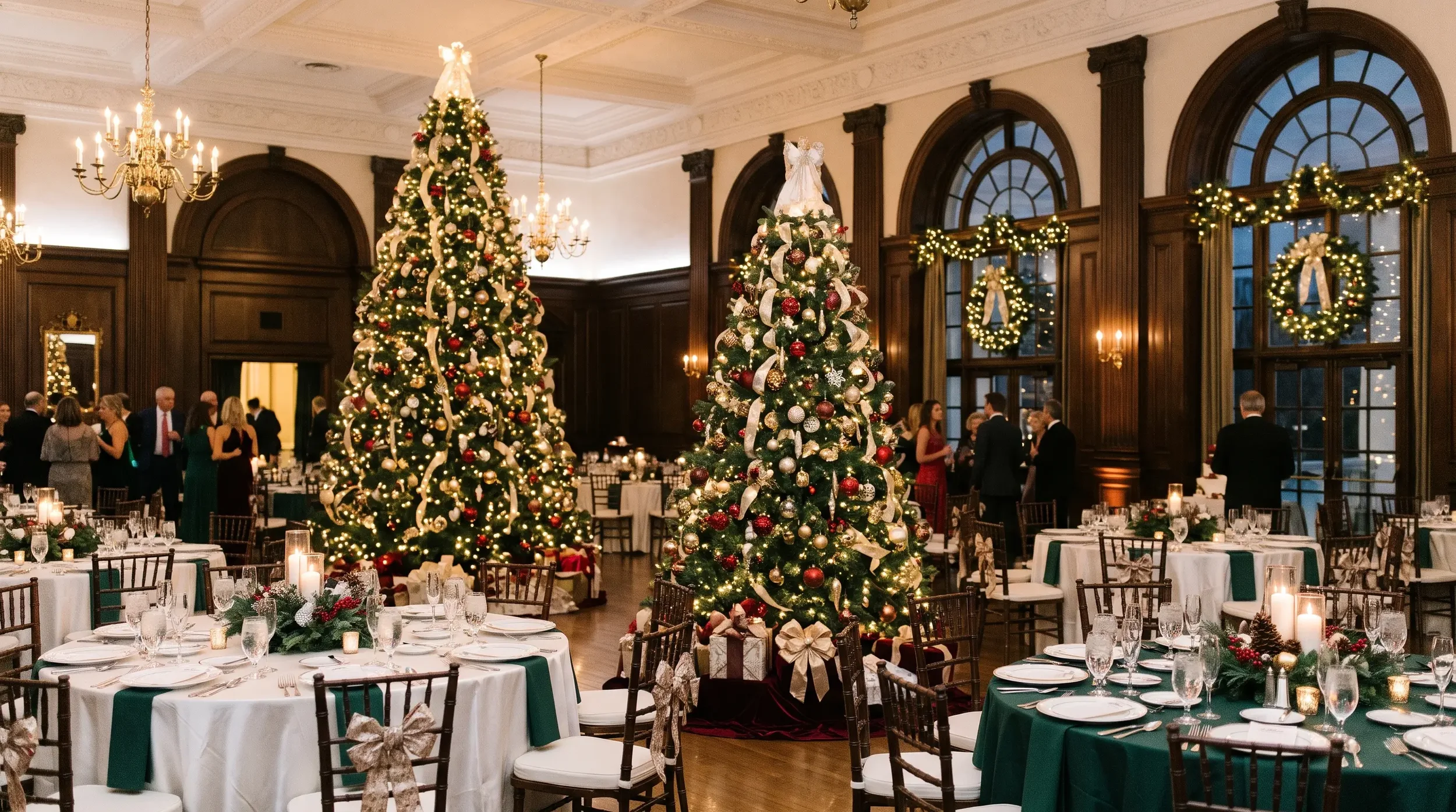
A Christmas tree is often the centerpiece of a venue's holiday season — the first thing guests see in a country club lobby, a corporate office, or an event space hosting a company party. But a tree in a public, high-traffic room raises the stakes well beyond a living room at home. More people move past it, more cords cross more walkways, and the tree itself is usually taller and heavier.
Before any decorating begins, the tree's stability, placement, and condition set how safe it will be all season long. The common hazards scale up fast in a venue: a tall tree that tips or wobbles, dry needles that raise the fire risk, branches too close to a heat source, damaged wiring hidden among the lights, blocked walkways and exits, and small ornaments within reach of guests' children or pets. A stable setup starts with choosing the right support before anything else goes on the tree — and for a large venue tree especially, a sturdy stand for your Christmas tree that matches the trunk diameter and the tree's full height is non-negotiable.
Tree safety starts with stability, placement, and maintenance — not decoration alone. This guide walks through choosing a safe location, preparing a live tree, inspecting your decorations, and keeping the setup safe all the way through your holiday events.
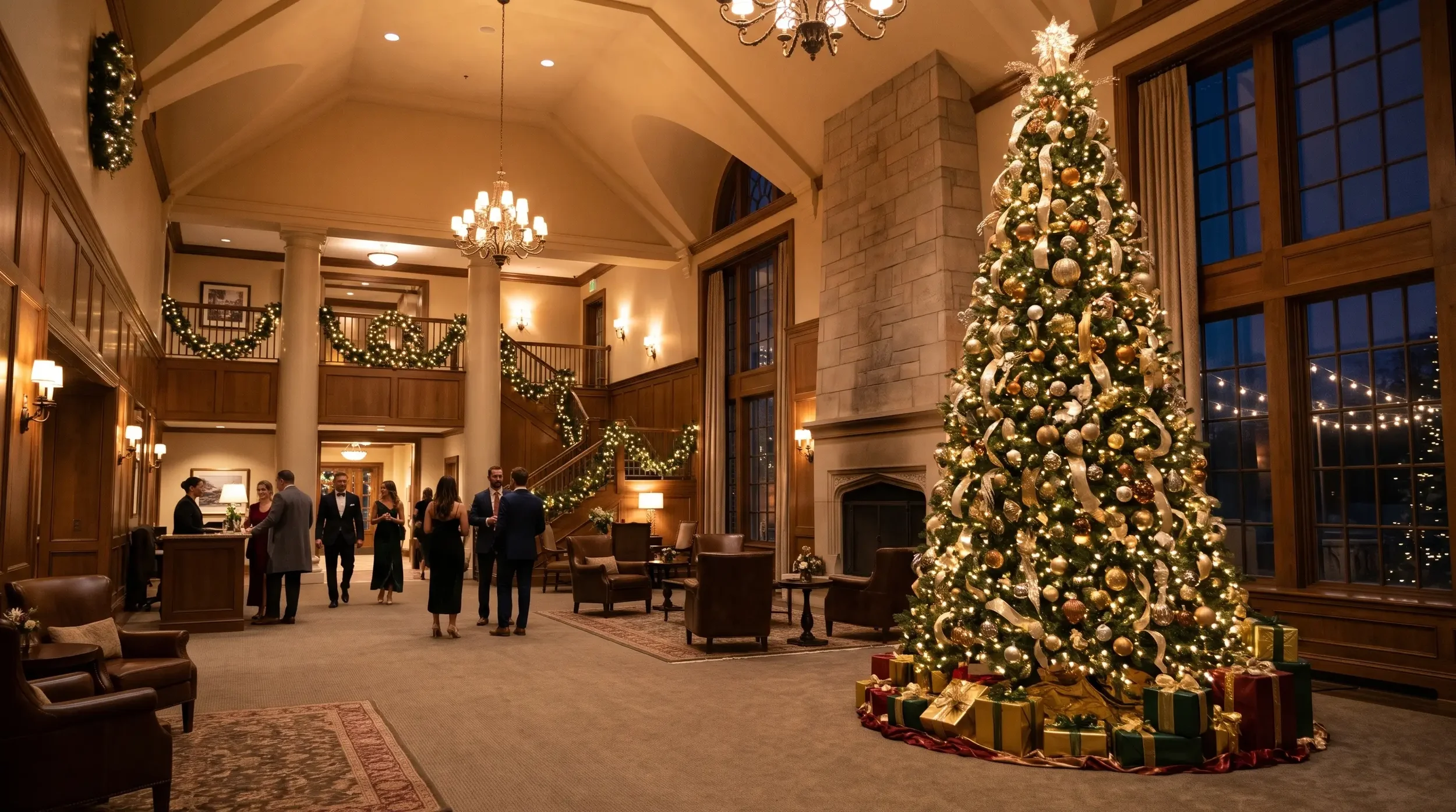
Choose the Right Location Before the Tree Goes Up
Keep the tree away from heat sources
Position both live and artificial trees away from fireplaces, radiators, heating vents, and wood stoves — and in commercial spaces, away from patio heaters or kitchen vents near a ballroom. Warm, dry air speeds up moisture loss in live trees, making them more flammable as the days pass. Make sure branches and decorations never block heaters or ventilation openings.
Preserve clear access through the room
In a venue this matters even more: don't block doorways, stairways, fire exits, or the paths guests and staff use most. Consider the tree's full footprint — the base, overhanging branches, gifts or displays, and trailing cords — not just the trunk. A tree that looks tucked away during setup can become a bottleneck once the room fills with guests.
Account for the room and the crowd
Guests' children may reach for ornaments near electrical connections, and catering or event staff will move through the space with trays and carts. In a busy lobby or ballroom, prioritize stability and clear traffic lanes over the perfect photo spot.
A quick example: a tree placed near a main entrance or a heating vent might look fine during setup, but guests brushing past it and warm air drying out the needles create overlapping hazards. Shifting the tree even a few feet often resolves both problems at once.
Establish a Stable Base
Match the support to the tree
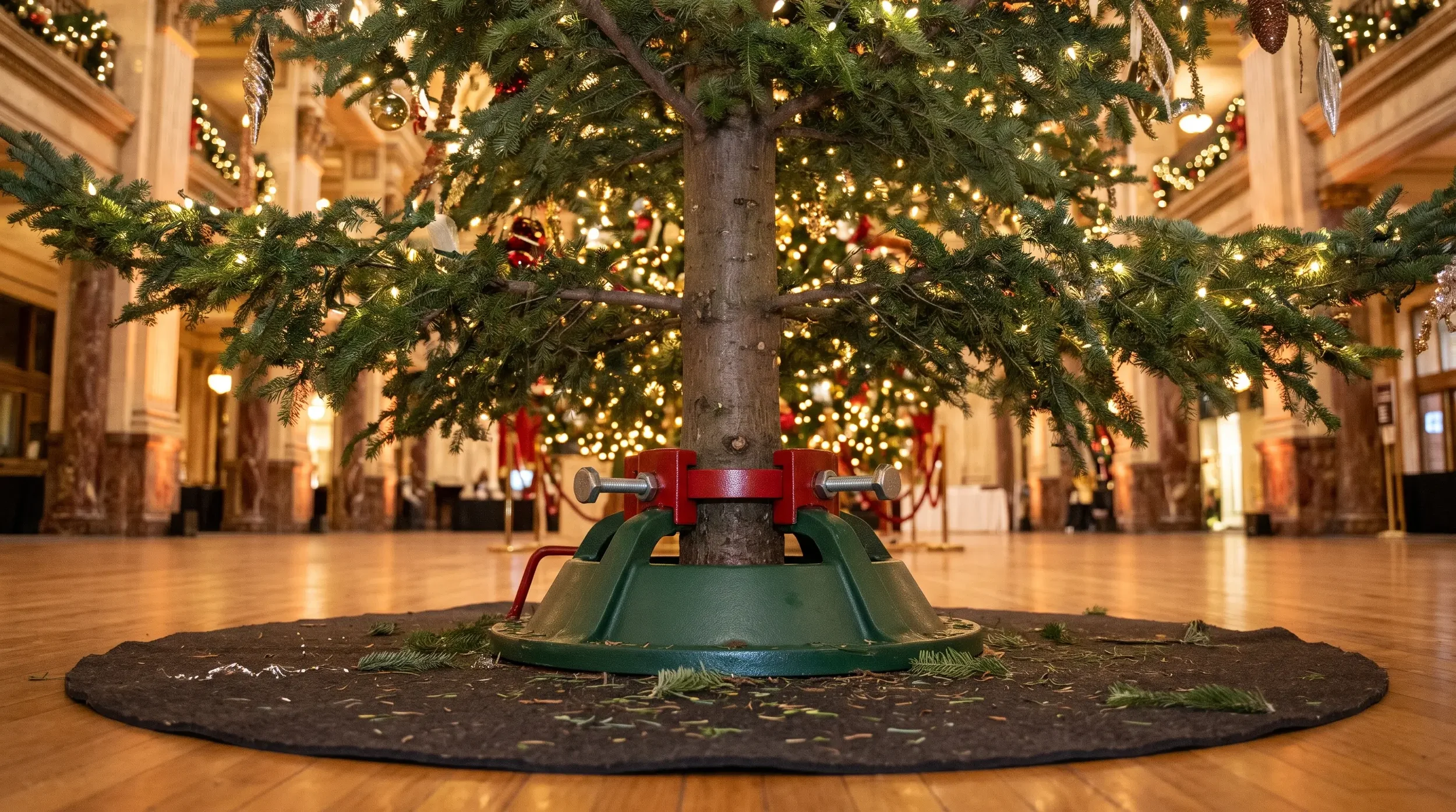
Venue trees tend to run tall — eight, ten, even twelve feet — so the base has to fit the trunk's diameter and carry the full height. A tall or top-heavy tree needs real stabilization and should never rest on improvised objects like buckets or stacked boards. Live trees need a stand designed to hold water; artificial trees should be secured according to the manufacturer's instructions. For a larger tree, a heavy-duty, properly rated stand isn't a nice-to-have — it's what keeps the whole display upright in a room full of people.
Check the tree before decorating
Confirm the trunk sits fully and straight in its base, then apply gentle, controlled pressure to the upper branches to test for wobbling. It's far easier to reposition or secure a tree before the lights and ornaments go on — and before guests arrive.
Protect floors and manage water
Use a waterproof mat beneath the stand to protect flooring from spills, and make sure the base stays level and resistant to sliding. In a venue, a spill on a lobby or ballroom floor is also a slip hazard. A taller tree has a higher center of gravity relative to its base width, which raises the risk of tipping — one reason a wide, properly fitted stand matters more as tree height increases.
Before-decorating checklist:
Trunk fits snugly in the stand
Tree stands vertically straight
Base feels stable when branches are gently pressed
Walkways and exits remain clear
Cords are routed away from guest and staff foot traffic
Select and Care for a Live Tree
Check freshness before purchase or installation
Look for green needles that resist being pulled from the branches, needles that bend rather than snap, and minimal shedding when branches are handled. A tree that's already dry becomes increasingly hazardous and won't recover simply by adding water — a real consideration when a venue tree may need to look good through weeks of events.
Maintain adequate moisture
Keep the stand filled with water and check the level daily — a freshly cut trunk can absorb water quickly during its first days indoors. Assign the daily check to a staff member so it doesn't slip during a busy event stretch. Plain water remains the baseline recommended by fire-safety guidance; additives or household chemicals aren't necessary.
Remove a deteriorating tree promptly
Watch for widespread needle drop, brittle branches, or a noticeably dry trunk. A severely dried-out tree shouldn't remain in the space, in a back room, or propped against the building. The National Fire Protection Association and the U.S. Consumer Product Safety Commission both publish guidance on live-tree dryness, watering, and disposal timing that's worth reviewing.
Inspect Lights and Electrical Decorations
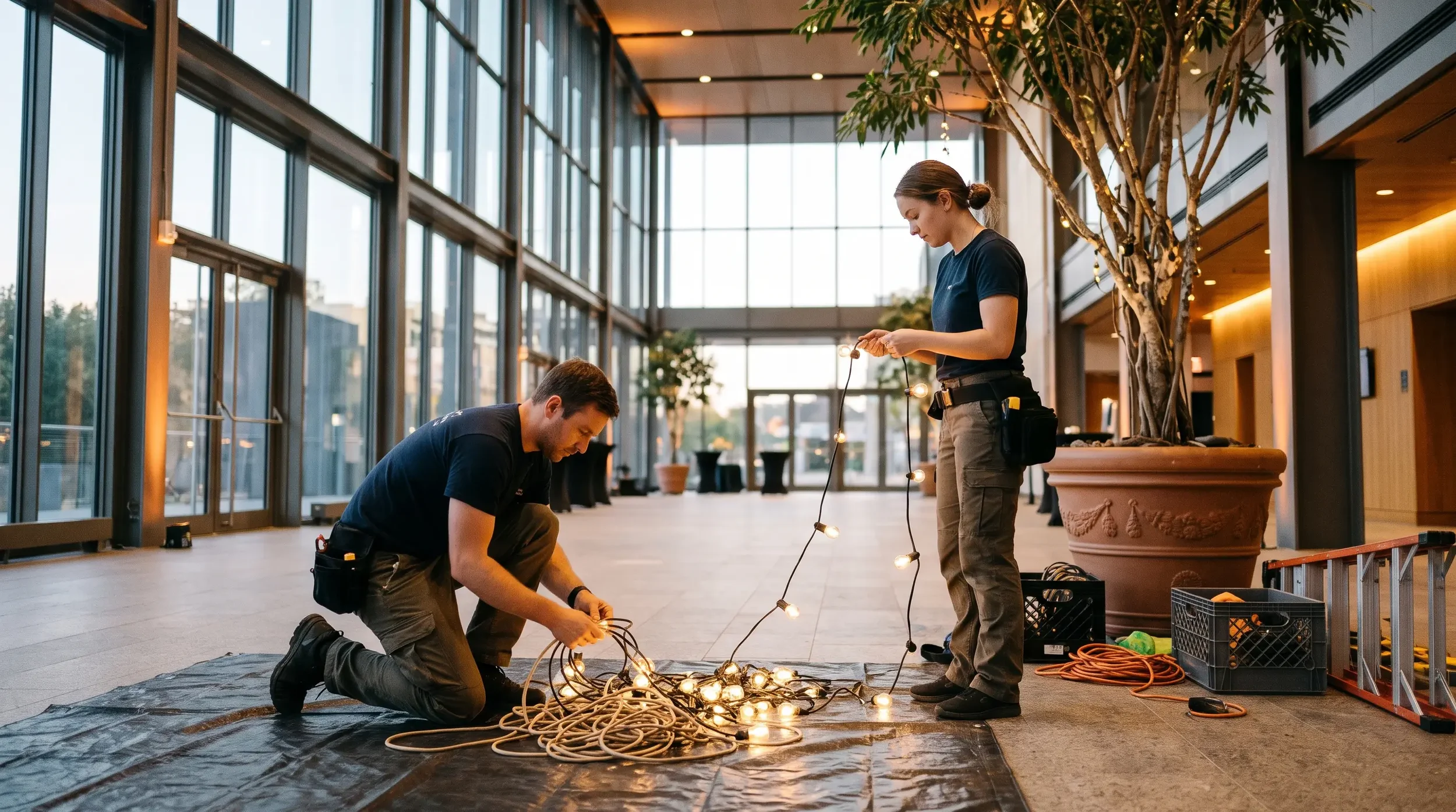
Inspect lights before installation, and switch them off whenever the space is unattended or closed for the night.
Check every string for frayed wires, cracked sockets, loose connections, or damaged plugs — and discard damaged strings rather than repair them.
Confirm lights are labeled for indoor or outdoor use as appropriate, and look for certification from a recognized testing laboratory.
Avoid placing electric lights on metallic trees, due to shock risk.
Tape down or cover any cord that crosses a guest or staff walkway, use ground-fault circuit-interrupter (GFCI) protection where required, and never overload the venue's extension cords or circuits.
Add Ornaments and Decorations Safely
Place fragile, sharp, or heavy decorations higher on the tree, out of reach of young guests and pets — especially at a family holiday party. Secure heavier ornaments to sturdy branches rather than thin tips, and steer clear of decorations resembling candy that small children might mistake for food. A practical approach for public spaces: a lower zone of unbreakable, child- and pet-safe decorations, and an upper zone for the more delicate, eye-catching pieces.
Maintain the Setup Across Your Events
Recheck stability and water levels regularly, inspect cords after each event or heavy foot traffic, and clear fallen needles promptly. Reassess the arrangement whenever the room changes — a reconfigured ballroom, a new furniture layout, or a bigger-than-usual guest count.
A Note from Our Studio
We style a lot of corporate holiday parties and country club events, and the tree is almost always the room's anchor — the backdrop for photos, the welcome moment as guests walk in. The safest displays we set are also the cleanest-looking: a properly rated base, cords tucked and taped, and lighting that doesn't pile on heat. It's one reason we lean on LED pieces for a warm glow — a custom neon sign with the company's or club's name runs cool and low-voltage, so you get a cozy, photo-ready focal point near the tree without another hot bulb or an overloaded circuit. Let the tree anchor the room, and keep everything around it simple and safe.
Key Takeaway
A safer venue Christmas tree combines a stable, correctly sized base; placement away from heat and traffic; adequate moisture for live trees; inspected lights with managed cords; securely placed decorations; and regular checks throughout your events. No single product eliminates every risk — always follow the manufacturer's instructions and local fire-safety codes for your space.
A Final Safety Check Before Doors Open
Tree is upright and stable
Water level is adequate (live trees)
No branches touch heat sources
Damaged lights or cords are removed; cords across walkways are taped or covered
Walkways and exits remain clear
Small decorations are inaccessible to children and pets
Lights are switched off when the space is closed or unattended
Frequently Asked Questions
Where should a venue put its Christmas tree?
Away from heat sources — fireplaces, radiators, heating vents, kitchen vents — and clear of doorways, stairways, fire exits, and the busiest guest and staff paths. Account for the tree's full footprint, including branches, displays, and cords, not just the trunk.
What kind of stand does a large venue tree need?
A heavy-duty stand rated for the tree's height and trunk diameter, wide enough to counter a tall tree's higher center of gravity, and — for a live tree — able to hold plenty of water. Larger commercial trees need a properly rated base, not an improvised one.
How do you keep a venue Christmas tree safe for guests and kids?
Put fragile, sharp, or heavy ornaments higher up, keep an unbreakable lower zone, tape down any cords crossing walkways, and switch the lights off when the space is unattended. Assign the daily water and stability check to a staff member.
Keep the Celebration Enjoyable by Planning for Safety
Thoughtful placement, a stable base, regular watering, careful electrical inspection, and routine monitoring address the most common and most preventable holiday hazards in a venue. Run through the short safety check before doors open, and repeat it anytime the tree or the room changes.