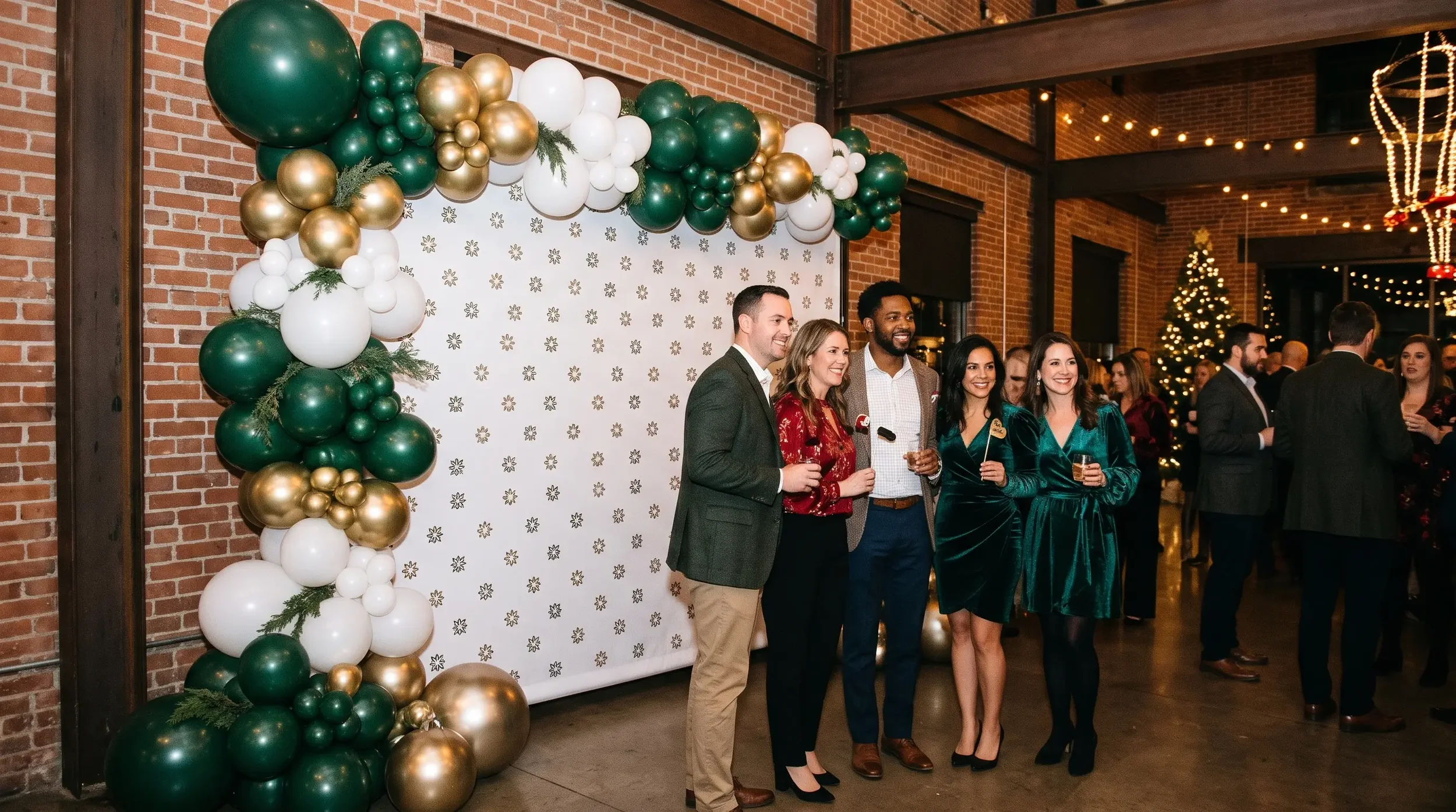
Most step and repeat backdrops are 8 feet tall by 8 feet wide, and that standard size fits two to four people in a photo, according to UPrinting. If you expect groups of four to six, go to 8 feet by 10 feet; Step and Repeat LA's rule of thumb is about 2 feet of backdrop width for every person you want in the shot.
The banner is only part of the answer, though. The stand, the space around it and anything you frame it with all change what fits in the room. Below we cover the standard sizes, how to pick one for your event, how big your logo should be, and what to measure before you order. If you'd like us to plan the whole photo spot for you, see our step-and-repeat backdrops for corporate events.
What is the standard step and repeat size?
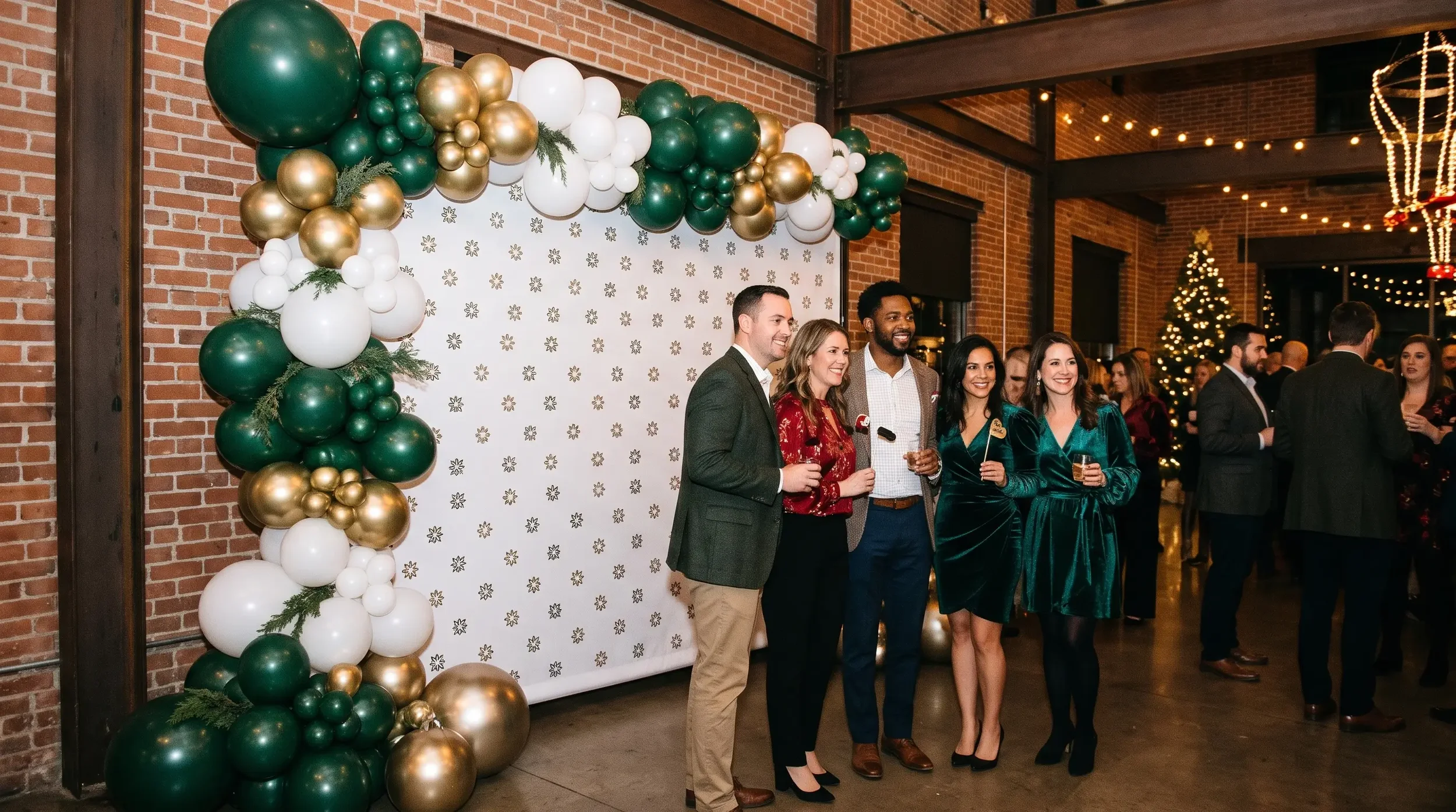
The size most printers call standard is 8 feet by 8 feet (96 by 96 inches). Canvas ETC notes that the 8-foot height is the norm and the width is what changes with the event. The other size you'll see everywhere is 8 feet tall by 10 feet wide. Both are popular for a practical reason: Step and Repeat LA points out that one person can set up and take down either size, and both fit inside a standard 10-by-10-foot trade show booth.
Step and repeat sizes compared
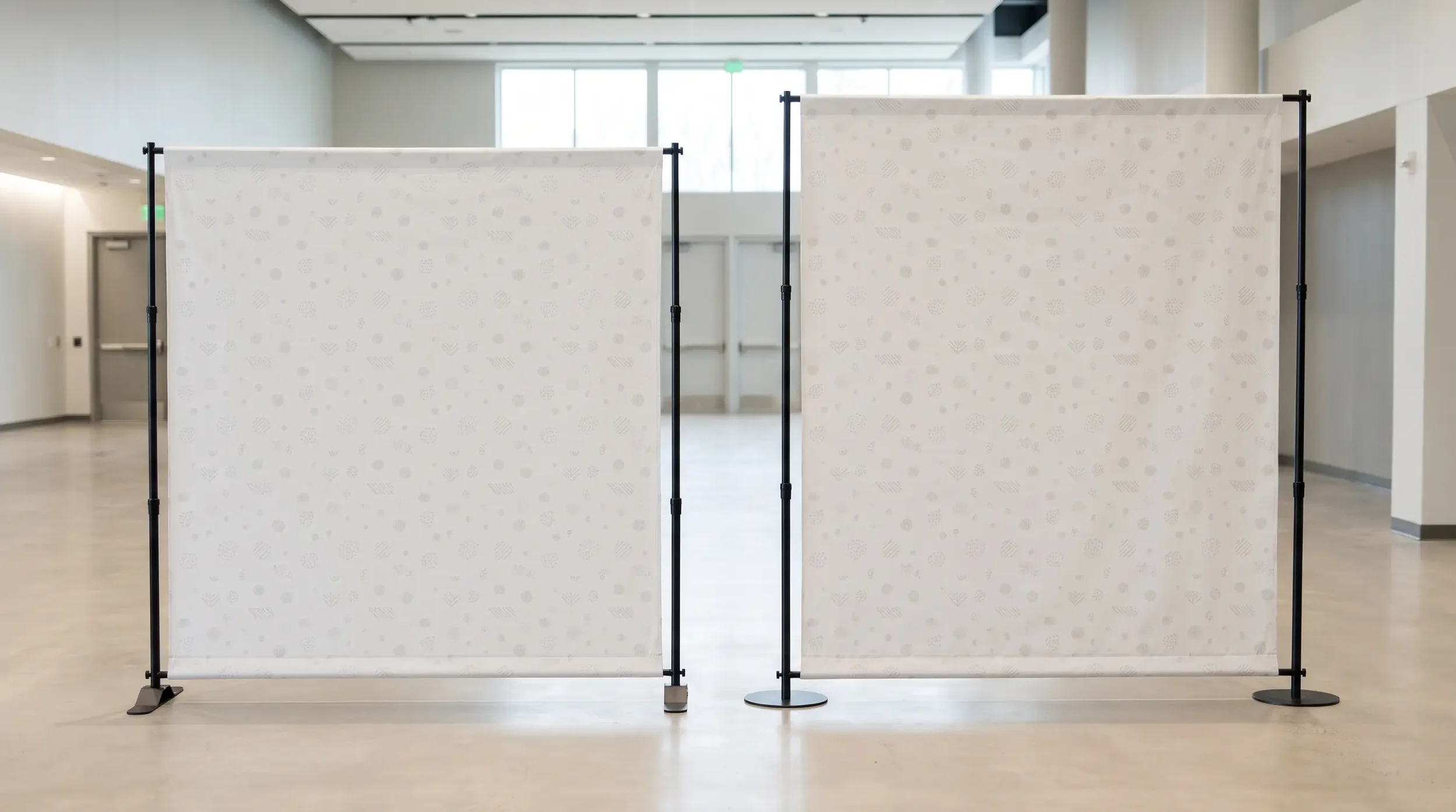
Here are the common sizes, what each is good for, and how many people each one fits, drawn from UPrinting's size guide and Canvas ETC.
8 feet tall by 5 feet wide: small spaces and solo shots. Fits 1 to 2 people.
5 feet tall by 8 feet wide: seated interviews, panels and low ceilings. Fits 2 to 3 people seated.
8 feet tall by 8 feet wide (the standard): most parties, launches and trade shows. Fits 2 to 4 people.
8 feet tall by 10 feet wide: group photos, galas and stage setups. Fits 4 to 6 people.
8 feet tall by 12 feet wide: larger groups and a full "wall" effect.
For a red carpet, the backdrop runs much longer. Step and Repeat LA says long red-carpet backdrops are typically 20 to 50 feet.
How do I choose the right size for my event?
Start with the biggest group you expect in one photo, not the guest count. Even a big holiday party still takes photos two, four or six people at a time. Use the 2-feet-per-person rule, then check it against these questions.
How many people will be in each photo?
Couples and small groups: 8 by 8 is plenty. Teams, award winners and families: 8 by 10. Whole departments or a sponsor wall that needs to read from across the room: 8 by 12 or longer.
Will people stand or sit?
For panels, podcasts and seated interviews, a shorter, wider banner works better. UPrinting recommends a banner 96 inches wide and 60 inches tall for seated shots, since it keeps logos behind people's heads without towering over them. It also helps in office spaces and meeting rooms with low ceilings.
How will the photos be taken?
Most guests shoot on a phone held upright. A tall, narrow frame means the edges of a wide banner often end up out of the shot, so the logos near the middle and at head height do the most work. If a hired photographer is shooting wide group photos, the extra width of an 8-by-10 pays off.
How much room does the space have?
Measure the wall or corner where the backdrop will go, the ceiling height, and the floor in front of it. You need room for the stand, for people to step in and out, and for whoever is taking the picture to back up far enough to fit everyone.
How much space do you need around a step and repeat?
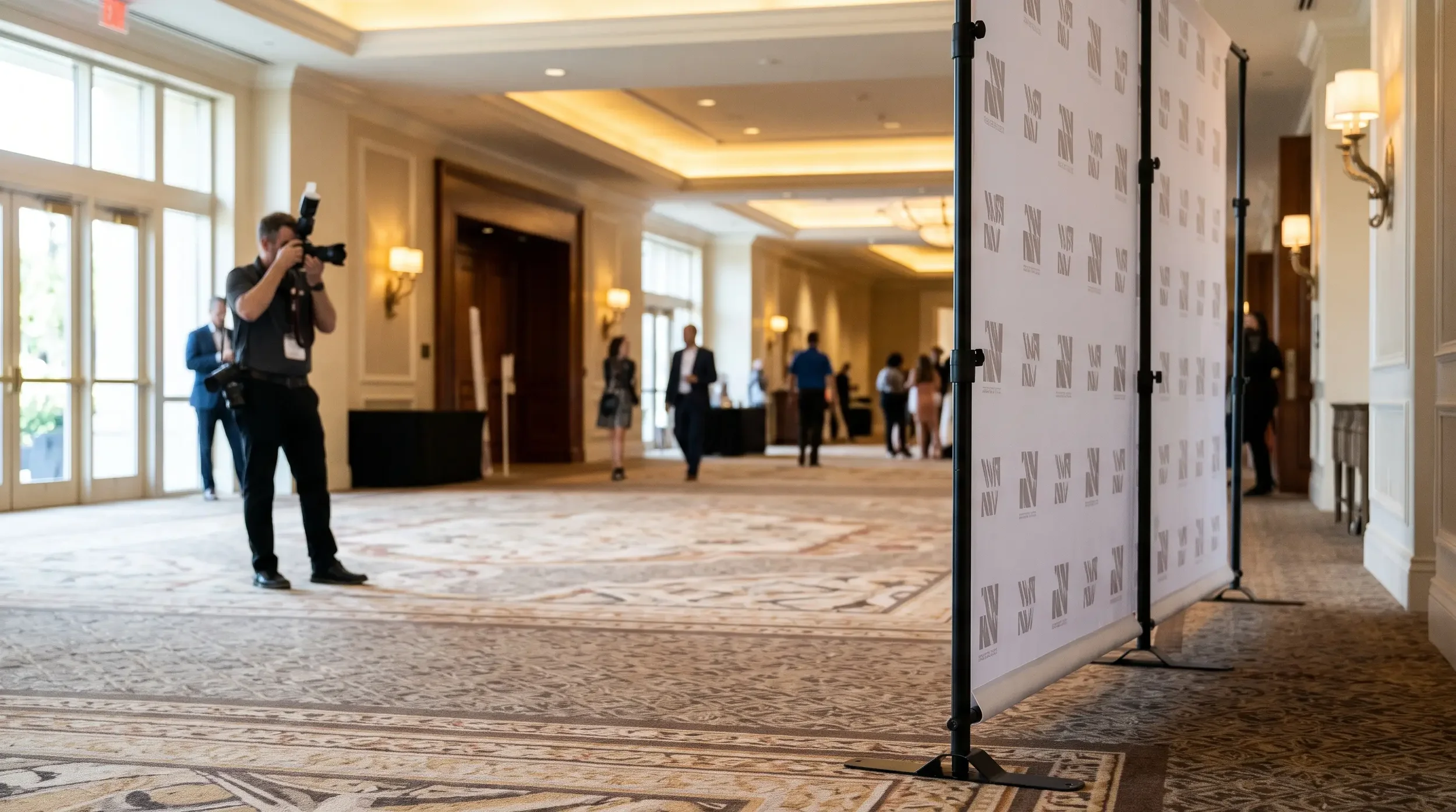
More than the banner itself. Most step and repeats hang on a telescoping stand that adjusts to the banner's size. The DDI Signs telescoping stand, for example, adjusts from 36 to 96 inches tall and sits on two bases that are 17 inches long, so the frame takes up floor depth even though the banner is flat.
Plan for three zones:
The backdrop zone: the banner's width, plus the stand's feet, plus anything you frame it with, like a balloon garland or plants.
The posing zone: open floor right in front of the banner where people stand. Keep chairs, tables and bars out of it.
The camera zone: room in front for the photographer, and for the line of people waiting their turn, so the line doesn't block the shot.
Check the ceiling too. An 8-foot banner on its stand is 8 feet tall before anything goes on top, so a garland or sign across the top needs clearance above that. Low ceilings and hanging lights are the usual reasons a backdrop has to come down a size.
Here's what we've learned framing step and repeats with balloon garlands. When a company asks us to add a garland to a banner they already own, we ask for a photo of it set up on its frame before anything else. The banner size is easy. What usually decides the plan is the room around it: where the stand's feet land, how close the wall is, and whether the garland can run down one side and across the top or down both sides. A garland adds width and depth beyond the banner's edge, so a corner that fits an 8-by-8 banner on its own can be tight once the garland goes on.
How big should the logo be on a step and repeat?
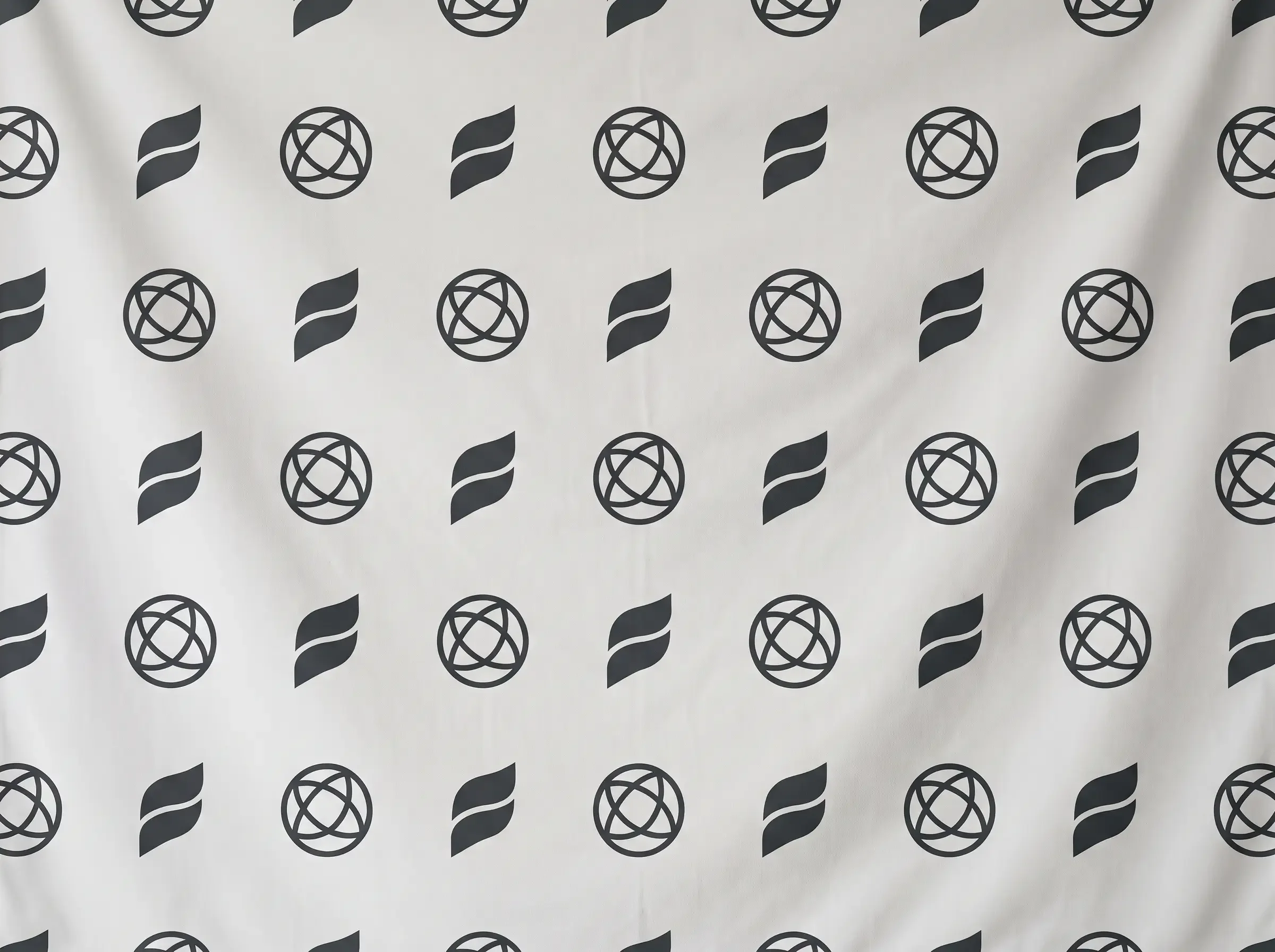
Logos on a step and repeat are usually 8 to 12 inches wide, spaced 12 to 18 inches apart in a staggered, checkerboard pattern, according to Canvas ETC. That spacing is what makes a logo show up behind every head no matter where people stand. A few more rules from the same guide:
Send a vector logo (.ai, .eps or .svg) so it can scale to banner size without going blurry.
Keep logos at least 3 inches from the edges so the stand or pole pockets don't hide them.
Don't crowd the edges. UPrinting notes that the edges of wide banners often get cropped in photos, so spread logos evenly across the middle.
If you have two logos, such as your company and a sponsor, alternate them in the same pattern so both show up in every shot.
What size step and repeat for a corporate holiday party?
For most office and venue holiday parties, an 8-by-8 or 8-by-10 banner is the right call. Guests pose in pairs and small groups, the backdrop usually goes near the entrance or the bar, and both sizes fit most event spaces. Go wider if you're planning team photos or an awards moment on stage. If you're still planning the night itself, our guide to planning a corporate Christmas party covers the rest.
Step and repeat banner or branded photo wall?
A printed step and repeat is the classic choice when the goal is the logo: press photos, sponsor walls and stage backdrops. If you want the photo spot to feel like part of the décor, a branded photo wall is the other route: a greenery or flower wall with your logo made as a custom neon sign mounted on it. It reads as décor first and brand second. We walk through that setup in how to use a custom neon sign to create a branded photo wall. A backdrop wall can fill the same spot in a room as a step and repeat, so plan its space the same way.
What to ask before you order
What size is the banner, and what are the stand's full width, height and footprint?
Is the material glare-free? Canvas ETC rates polyester fabric fully glare-free, which matters under camera flash.
How does it set up, and who sets it up and takes it down at the venue?
What file format and logo size do they need from you?
Do you keep the banner after the event?
Plan the whole photo spot with Boxwood Rose
We print custom step-and-repeat banners with your logo and frame them with a balloon garland in up to three of your brand colors, down one side and across the top or down both sides. The banner is made for you and is yours to keep for your next event. Already have one? We'll add a garland to the banner you own. We deliver, set up and take down across Minnesota, western Wisconsin and Southwest Florida, and we work around your venue's load-in and load-out times.
Tell us your date, your venue and how many people you expect in each photo, and we'll put together a quote. Request a quote for your step-and-repeat backdrop. Planning an event outside our delivery area? A custom neon logo sign ships nationwide and gives any backdrop a branded centerpiece.