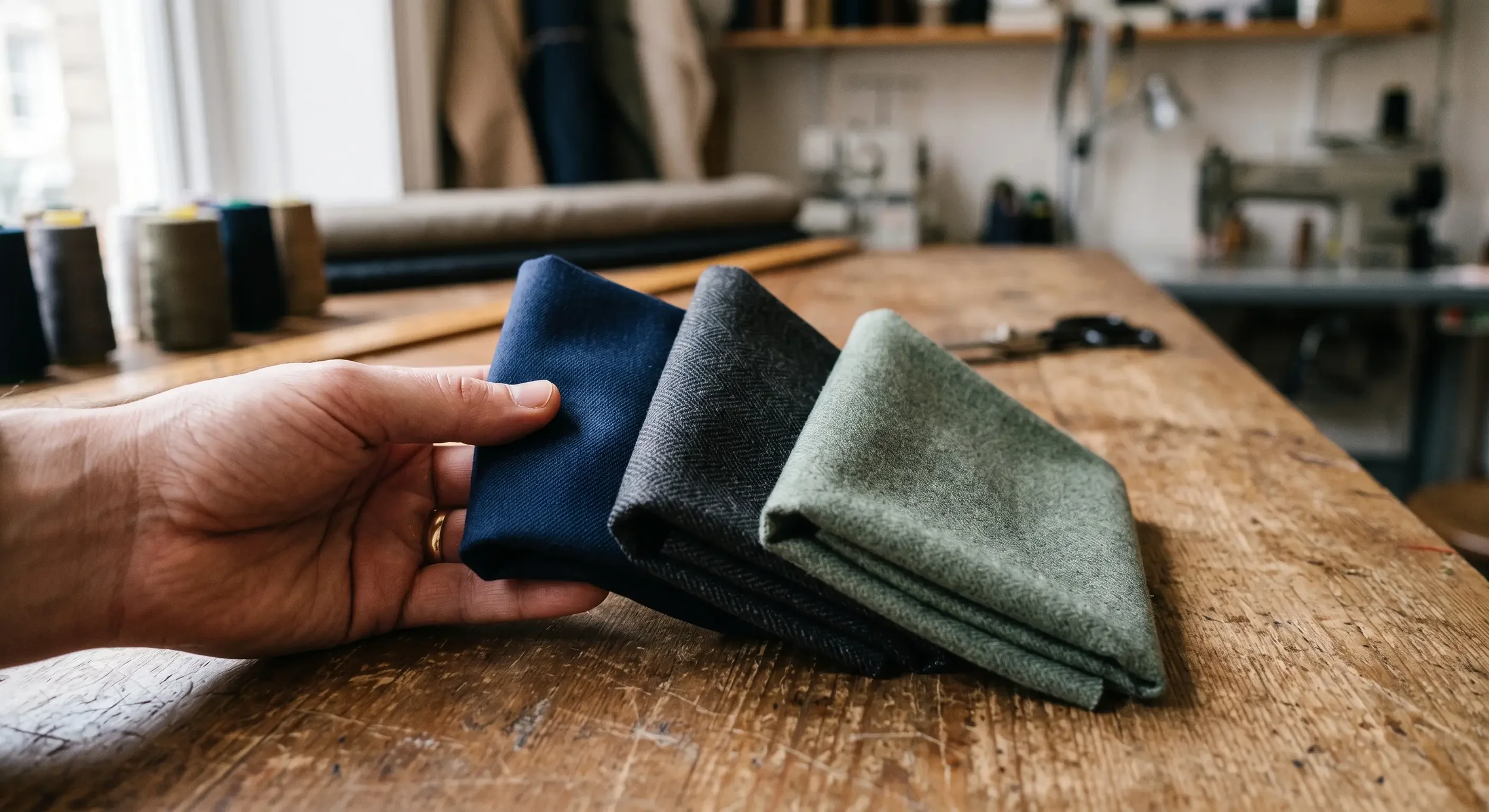
Your wedding suit will appear in more photographs than almost anything else you ever wear, yet most grooms put less thought into it than they do choosing a caterer. In a city like New York, getting a custom suit right takes more than flipping through fabric swatches and showing up once. You need to understand how the process works, know what to ask, and start early enough that nothing gets compressed at the end. Get it right and you'll leave with something that fits your body, reads well in the setting, and holds up from every camera angle. This guide covers finding the right tailor, choosing the right materials, and managing every fitting from the first appointment through final pickup.
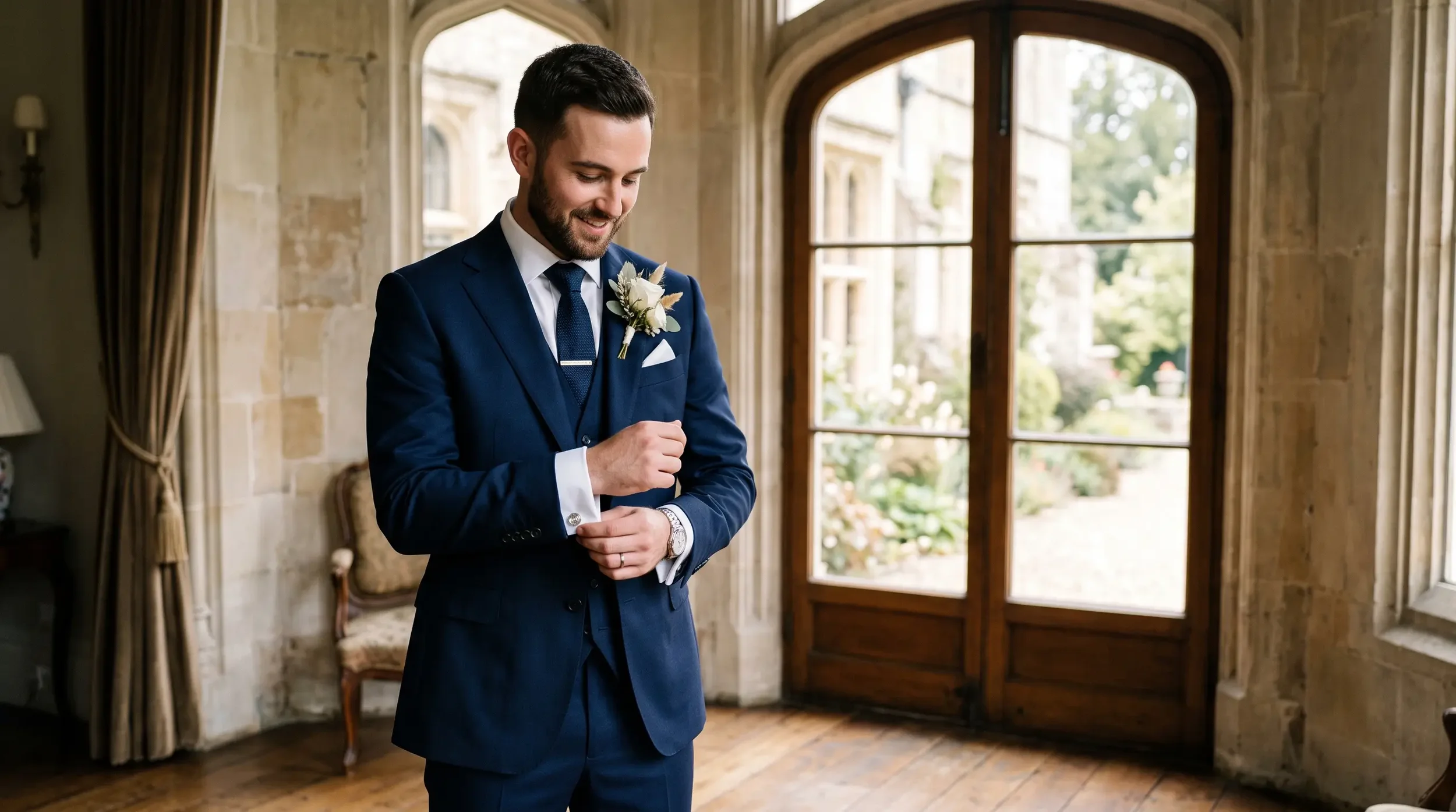
What to Look for in a Custom Wedding Suit Tailor
Not every tailor offering custom suits has real experience with formal wedding wear, and that gap matters more than most grooms expect. Someone who spends most of their time cutting business suits may not fully grasp the construction of morning coats, the proportions of dinner jackets, or how formal lapel styles work in a black-tie setting. Before booking a consultation, ask directly about their wedding and formalwear experience. You want to see examples, understand how many wedding suits they complete each year, and find out whether a master tailor takes your measurements personally or leaves that step to sales staff. It also helps to compare established options such as Alan David's best custom suits in NYC with other similar tailors to see how their fitting process, construction, and level of customization differ. Look for a process that includes a basted fitting rather than a single try-on close to delivery. That stage, where the suit is temporarily assembled before final construction, is where important fit corrections can still be made. Without it, much more depends on the original pattern being right from the start.
Experience with Formal Wear and Fit Standards
A tailor's experience with formal wear shows up in the details: gorge height, button stance, lapel roll, and how the jacket sits across your upper chest and shoulders. These aren't purely aesthetic choices. They're structural decisions that determine whether a suit looks like it was made for you or merely altered to fit you. Ask any tailor you're considering whether they draft a pattern for your body or work from a pre-existing house block with modifications. Custom tailors draft from scratch; made-to-measure tailors modify a template. Both can produce excellent results, but your body's specific proportions (one shoulder lower than the other, forward head posture, a fuller seat) respond better to a pattern built around those realities rather than adjusted after the fact. For a wedding suit, you also want someone who understands how formal dress codes translate to construction. A morning coat has different structural requirements than a standard two-button suit, and a tailor who hasn't built one recently may not catch the nuances until it's too late to correct them.
Timeline and Communication During the Fitting Process
Most custom tailors in New York need a minimum of four to five weeks for a wedding suit, and that's assuming no complications surface at the fitting stage. Start at least three months out if you want breathing room for a second round of adjustments, material shipping, or any unexpected changes to your body before the day itself. Timeline matters, but so does how a tailor handles communication throughout. You want to know what happens after each fitting, when you'll hear back, and how the handoff between measurement, cutting, and construction actually works. Good tailors treat communication as part of the service; they tell you what they found at each stage and what they changed. If a tailor is vague about when your next appointment should happen, or waves off your questions about why a correction was made, that's worth noticing before you hand over a deposit. Ask upfront whether they've ever missed a wedding deadline. Listen carefully to the answer.
Choosing Fabric, Color, and Style for Your Wedding Day
Fabric and color decisions tend to get rushed because they feel easier than structural ones, but they carry just as much weight in the finished result. The fabric you choose determines how the suit drapes, how it reads in photographs, and whether you're comfortable through a six-hour reception. Color determines how you register against your venue, your partner's outfit, and the overall tone of the event. Neither call should be made on the fly during a first consultation. Come in with a clear picture of your venue — indoor or outdoor, daytime or evening, formal or relaxed — and the season in which you're getting married. Those factors narrow your fabric and color options faster than any personal style preference, and a good tailor will work through them with you before a single bolt of cloth comes off the shelf. Lapel shape, pocket configuration, button count — those style choices follow naturally from that foundation, not the other way around.
Picking the Right Fabric Weight and Finish
Fabric weight is measured in grams per meter (often abbreviated as gsm or g/m²), and it's one of the most practical decisions you'll make. A summer outdoor wedding calls for something in the 200 to 260 gsm range: lightweight wools, fresco weaves, or linen blends that breathe and resist wrinkling under heat. A fall or winter wedding shifts that range upward to 280 to 340 gsm, where heavier wools hold their shape through cold and look richer in evening light. Spring weddings generally sit in the middle, around 240 to 280 gsm, where a mid-weight Super 110s to Super 130s wool performs well across temperature swings. Finish matters too. Matte finishes photograph more neutrally and work across formal and semi-formal settings. Slight sheen from mohair or silk blends reads well under evening lighting but can look overdone in a daytime garden ceremony. Major fabric mills like Zegna, Loro Piana, and Dormeuil produce fabrics for suiting across all of these ranges, and a tailor with strong mill access gives you far more useful options than one who stocks a limited in-house selection.
Classic Colors and Modern Alternatives That Work for Weddings
The table below covers the most common wedding suit colors observed across formal and semi-formal settings, with notes on setting suitability and photography performance as of September 2026.
| Color | Formality Level | Best Setting | Photography Performance | Works With |
|---|---|---|---|---|
| Navy | Formal to semi-formal | Indoor and outdoor | Strong in natural and artificial light | White, ivory, blush, burgundy |
| Charcoal | Formal | Indoor, evening | Rich contrast in low light | White, silver, dusty blue |
| Medium gray | Semi-formal | Daytime, outdoor | Neutral, reads cleanly | Almost any palette |
| Ivory/cream | Semi-formal | Beach, garden, destination | Warm in sunlight | Earth tones, greenery |
| Black | Black tie | Indoor, evening | High contrast, formal | White, red, emerald |
| Dusty blue | Semi-formal | Outdoor, spring/summer | Soft in natural light | White, lavender, sage |
| Tan/camel | Casual to semi-formal | Outdoor, fall | Warm tone in golden light | Rust, olive, cream |
| Sage green | Semi-formal | Outdoor, garden | Earthy, reads well in greenery | White, blush, navy |
Navy and charcoal remain the most requested colors in NYC custom wedding tailoring because they perform across the widest range of venues and lighting conditions. But modern alternatives — dusty blue, sage, tan — have become far more common as couples move toward personalized aesthetics over strict tradition.
The Fitting Process and What to Expect
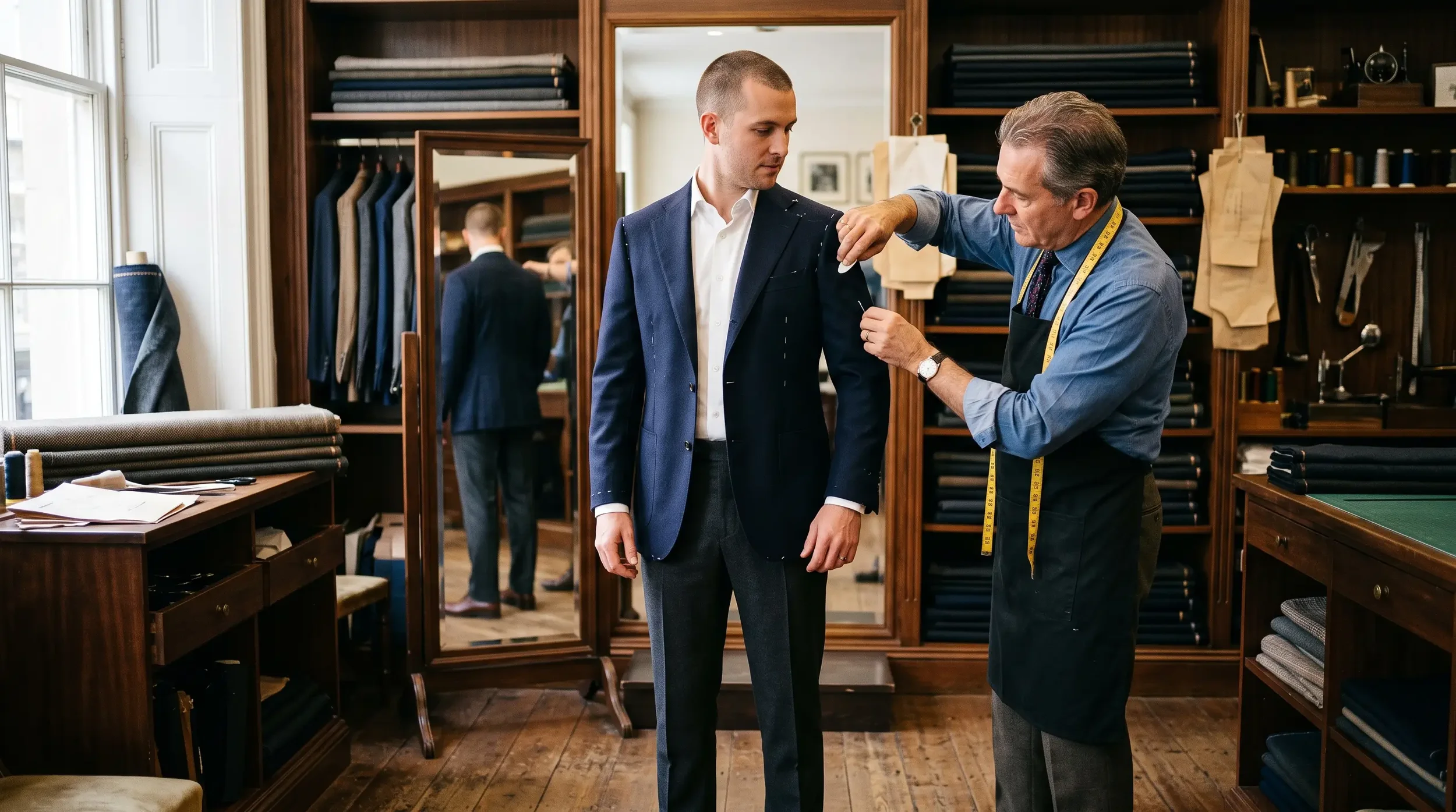
The fitting process is where a custom wedding suit either justifies its cost or shows its weaknesses, and knowing what should happen at each stage protects you from accepting something that falls short. Most New York custom tailors work through multiple stages: initial measurements, a basted or shell fitting, then one or two additional fittings before final delivery. Each stage serves a specific purpose. Skipping any of them to save time is a tradeoff that tends to surface in the finished garment. Come to every fitting dressed the way you'll be dressed on the wedding day — shirt, tie, shoes. Fit shifts when you add a collar and a belt, and a tailor who sees the full picture at each session catches problems that might otherwise only show up in the photos.
Multiple Fittings and How They Refine the Suit
The first fitting — basted or canvas — is where the garment exists in a temporary state, stitched loosely so major adjustments can happen without damaging finished seams. It's the most critical appointment in the whole process. A skilled tailor checks shoulder pitch, chest suppression, seat balance, sleeve length, and jacket length all at once. Corrections at this stage cost almost nothing; corrections after final construction are expensive and sometimes structurally impossible. A second fitting, often called a forward fitting, reviews those changes in a more complete version of the suit — jacket nearly finished, trousers close behind. Waist suppression, trouser break, and button placement get dialed in here. Some tailors add a third fitting when second-round corrections were significant. Don't push back on a third appointment. It means the tailor is serious about the outcome, not that something went wrong.
Final Adjustments Before Your Wedding Date
Schedule your final fitting no earlier than six weeks before the wedding and no later than two weeks out. Six weeks gives the tailor time to address any last-round corrections without rushing through them. Two weeks is the minimum buffer for pressing, delivery, and a quick fix if anything needs attention once the suit is home. At the final fitting, pay close attention to how the jacket sits when you button it and move — reach forward, sit down, raise your arms slightly. Those movements reveal whether the back seam has enough ease, whether the armhole is cut high enough for comfort, and whether the trouser waistband will stay put through a full day. If anything feels off, say so directly; a good tailor would rather hear it in the shop than have you uncomfortable on the day. Before you leave, confirm the pickup date, ask how the suit should be stored, and get a contact number for any last-minute questions.
Frequently Asked Questions
How far in advance should you order a custom wedding suit?
Most NYC custom tailors need four to five weeks at a minimum, but start at least three months out. That buffer leaves room for a second round of adjustments, material shipping, and any changes to your body before the day.
What color suit is best for a wedding?
Navy and charcoal are the most versatile — they read well indoors and out, in natural and artificial light, and pair with almost any palette. Modern alternatives like dusty blue, sage, and tan work beautifully for outdoor and seasonal weddings.
What's the difference between custom and made-to-measure?
A custom (bespoke) tailor drafts a pattern from scratch for your body; a made-to-measure tailor modifies a pre-existing house block. Both can produce excellent results, but unusual proportions tend to respond better to a pattern built around them from the start.
How many fittings does a custom wedding suit need?
Usually two to three: a basted (canvas) fitting where major adjustments are made, a forward fitting to refine them, and sometimes a third if the second round of corrections was significant. Don't skip any to save time.
The Bottom Line
We spend our weekends installing flower walls, greenery backdrops, and neon signs at weddings, which means we've watched a lot of grooms step in front of a camera. After enough of them, one pattern is hard to miss: a suit that actually fits the shoulders reads sharp in every wide shot, while an off-the-rack jacket that pulls or gaps turns up in all of them. A beautiful backdrop can only carry so much of a photo — what you're wearing in front of it carries the rest.
So getting the perfect custom wedding suit in NYC comes down to three things: finding a tailor who understands formal construction and communicates clearly, choosing fabric and color that suit your venue and season, and staying actively involved through every fitting rather than assuming the process will sort itself out. Start early. Ask direct questions. Don't skip fittings. The suit you end up with — built for your actual body and your actual day — is worth every appointment it takes.
Once the look is handled, Boxwood Rose can help set the scene behind it — we ship custom neon signs nationwide for weddings and receptions. Get in touch to add one to your day.