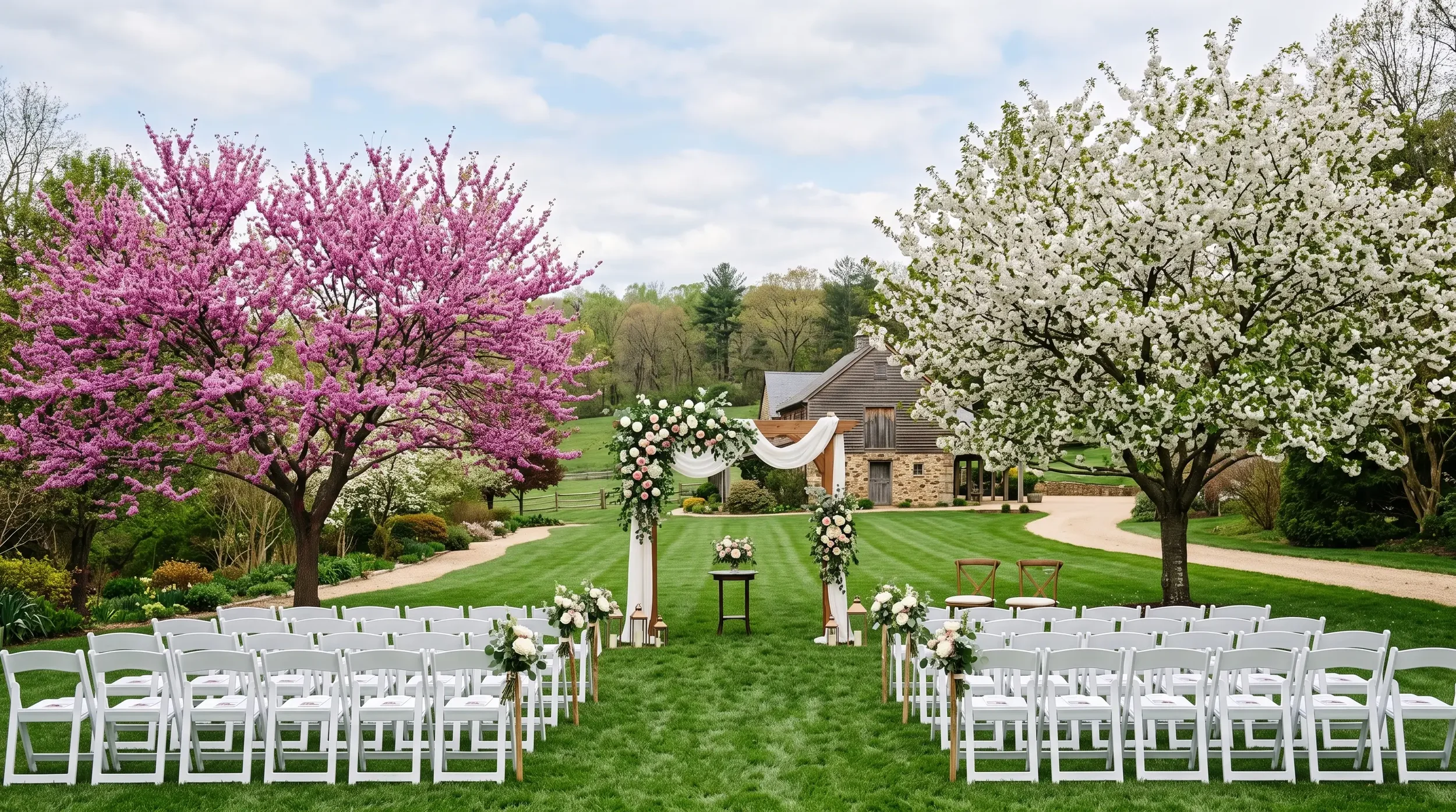
The trees on a wedding venue's grounds are its most photographed, longest-lasting décor — and the ones you plant this fall decide what next spring's ceremonies and first looks will look like. Fall is the secret season for planting: the soil is still warm, the air is cool, and a tree spends the whole winter quietly settling its roots so it's ready to explode into color by April, right as wedding season begins.
Whether you run an established venue or are building a new one, a handful of well-placed flowering trees can give couples a backdrop no rental can match. Here are seven of the prettiest to get in the ground this fall — plus how to think about placing them across a venue.
Why Fall Planting Beats Spring Planting
Trees planted in fall get a six-month head start. Their roots grow through the cool season while the leaves are gone, so all the tree's energy goes underground. By spring, the root system is already established and the tree can focus entirely on producing flowers and leaves.
Spring-planted trees, on the other hand, have to grow roots and push blooms at the same time. They usually skip the first year of flowers and take twice as long to look established. For a venue, that head start is the difference between a photogenic first season and a bare year of waiting.
The sweet spot for fall planting is roughly six weeks before the ground freezes in your zone. In most of the northeast and midwest, that means late September through early November.
The 7 Flowering Trees at a Glance
| Tree | Mature size | Bloom time | Zones | Light |
|---|---|---|---|---|
| Eastern Redbud | 20–30 ft (wider than tall) | Early–mid spring | 4–9 | Full sun to part shade |
| Flowering Dogwood | 15–30 ft | Mid–late spring | 5–9 | Part shade, morning sun |
| Star Magnolia | 15–20 ft | Late winter–early spring | 4–9 | Full sun |
| Serviceberry | 15–25 ft | Early–mid spring | 4–9 | Sun to part shade |
| Ornamental Cherry | 15–40 ft (by variety) | Early–mid spring | 5–8 | Full sun |
| Crabapple | 15–25 ft | Mid spring | 4–8 | Full sun |
| Saucer Magnolia | 20–30 ft | Early–mid spring | 4–9 | Full sun to part shade |
1. Eastern Redbud
Redbud is the tree that turns entire hillsides pink in April. Its branches erupt with tiny magenta-purple flowers before a single leaf appears, giving you a cloud of color when the rest of the grounds are still gray.
Mature size: 20 to 30 feet tall, wider than tall
Bloom time: early to mid spring
Best in: zones 4 to 9, full sun to part shade
Plant it near a ceremony lawn or patio, or as the anchor of a first-look photo spot. The heart-shaped leaves keep the tree pretty long after the blooms fade.
2. Flowering Dogwood
Dogwood gives you the classic layered white or pink bloom that reads as pure spring elegance. The flowers sit flat on horizontal branches, creating a tiered look that photographs beautifully from any angle.
Mature size: 15 to 30 feet
Bloom time: mid to late spring
Best in: zones 5 to 9, part shade with morning sun
Dogwoods want dappled light and moist, well-drained soil. Set one where an existing oak or tall pine throws filtered sun — often the edge of a ceremony lawn or a garden path.
3. Star Magnolia
Star magnolia opens the earliest of any flowering tree on this list. In late winter, while snow is still possible, it covers itself in white, star-shaped blooms that smell faintly of lemon.
Mature size: 15 to 20 feet
Bloom time: late winter to early spring
Best in: zones 4 to 9, full sun
It stays compact, which makes it perfect for courtyard corners or a small ceremony garden. Pair two on either side of an aisle, arbor, or entrance for instant symmetry in wide shots.
4. Serviceberry
Serviceberry is a four-season showpiece disguised as a modest little tree. Fine white flowers in April, edible berries in June, brilliant orange-red foliage in October, and elegant silver bark all winter.
Mature size: 15 to 25 feet
Bloom time: early to mid spring
Best in: zones 4 to 9, sun to part shade
Birds love the berries. If your venue leans wild and cottage-garden rather than formal, this is the one — and the fall color extends the season for autumn weddings.
5. Ornamental Cherry
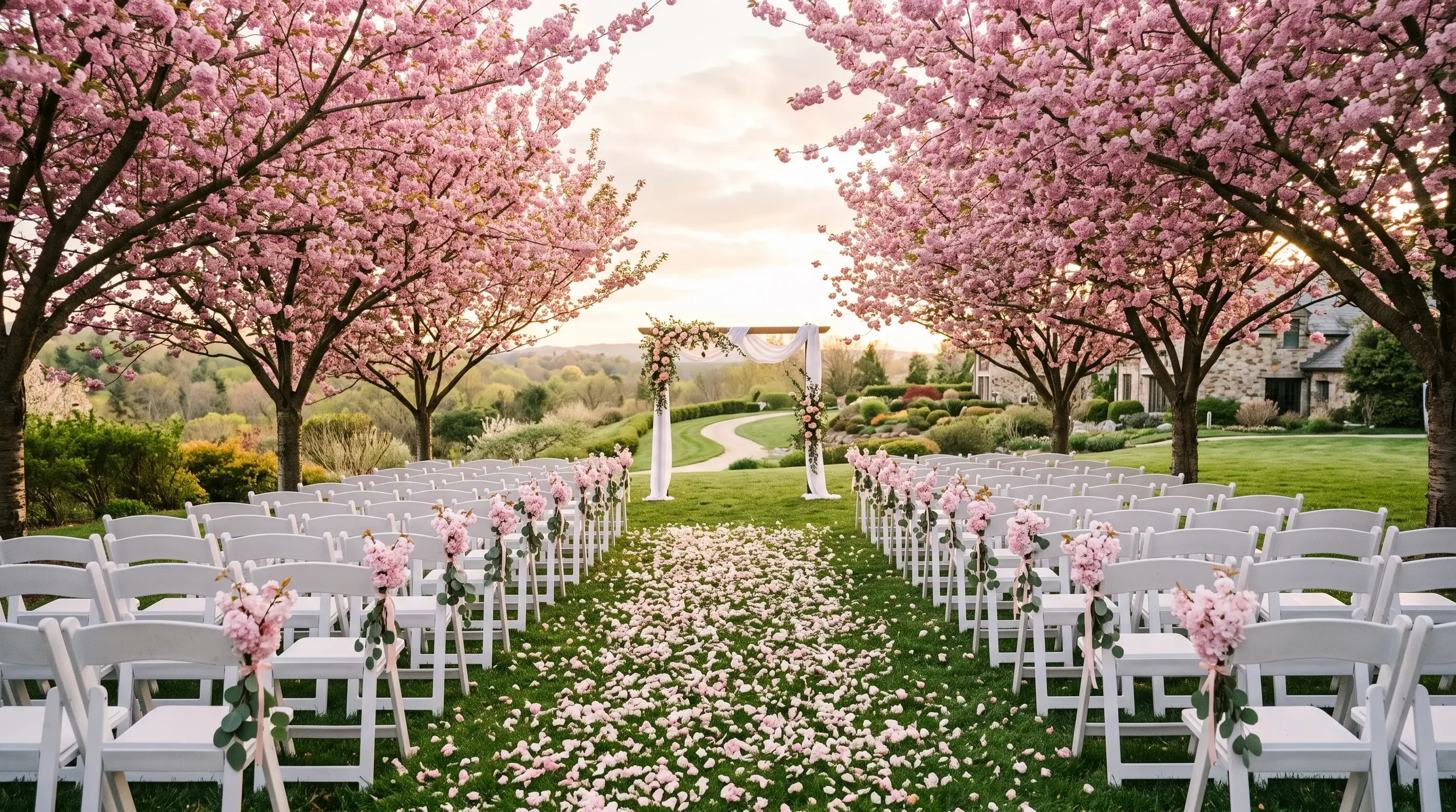
Nothing beats a cherry tree in full bloom for pure drama. Weeping varieties cascade like a pink waterfall. Upright varieties like Yoshino carpet the ground with petal-snow when the blooms drop.
Mature size: 15 to 40 feet depending on variety
Bloom time: early to mid spring
Best in: zones 5 to 8, full sun
Cherries need good drainage and hate wet feet; if the site puddles in spring, mound the planting a few inches above grade to keep the crown dry. A row of cherries lining an aisle or drive is one of the most photographed looks in the business.
6. Crabapple
Crabapple is the tree that keeps giving after the blooms fade. Pink or white flowers in spring, glossy leaves through summer, small colorful fruit in fall that hangs on into winter and feeds the birds.
Mature size: 15 to 25 feet
Bloom time: mid spring
Best in: zones 4 to 8, full sun
Choose a disease-resistant variety like Prairifire or Sugar Tyme. Older crabapple varieties can be prone to leaf spot and scab, which ruins the show by August — the last thing you want mid-season.
7. Saucer Magnolia
Saucer magnolia produces the biggest, most theatrical blooms of any tree on this list. The flowers are the size of teacups, in shades of pink, purple, and cream, and they open before the leaves so the tree looks like a giant floral arrangement in the sky.
Mature size: 20 to 30 feet
Bloom time: early to mid spring
Best in: zones 4 to 9, full sun to part shade
Plant it where guests and couples will see it — near the ceremony site or a signature photo spot. When it blooms, no one wants to miss a single day of it.
How to Place Flowering Trees on a Wedding Venue
Choosing the trees is only half the job. Where they go on the grounds is what turns them from landscaping into a backdrop couples book you for.
Plant where the moments happen. Put your best trees near the ceremony site, the aisle, and the first-look spot — not just along the driveway or the property line. A tree only earns its keep if it's in the frame.
Frame, don't block. A pair flanking an arbor or aisle reads beautifully in wide shots; a single specimen behind the couple anchors a portrait. Just keep sightlines clear so guests can see the ceremony.
Stagger bloom times across the season. Plant a mix so something is always in flower through the spring wedding calendar — star magnolia opens first, cherry and redbud follow, and dogwood carries the late-spring dates.
Think about shade and shoulder seasons. A tree that shades the cocktail lawn by June is a gift; serviceberry and crabapple keep the grounds interesting into fall for autumn weddings.
Treat trees as permanent décor. They're the one part of your venue that gets better every year — and the one couples can't recreate with a rental.
Planting Tips That Actually Matter
A few small choices make the difference between a tree that thrives and one that struggles.
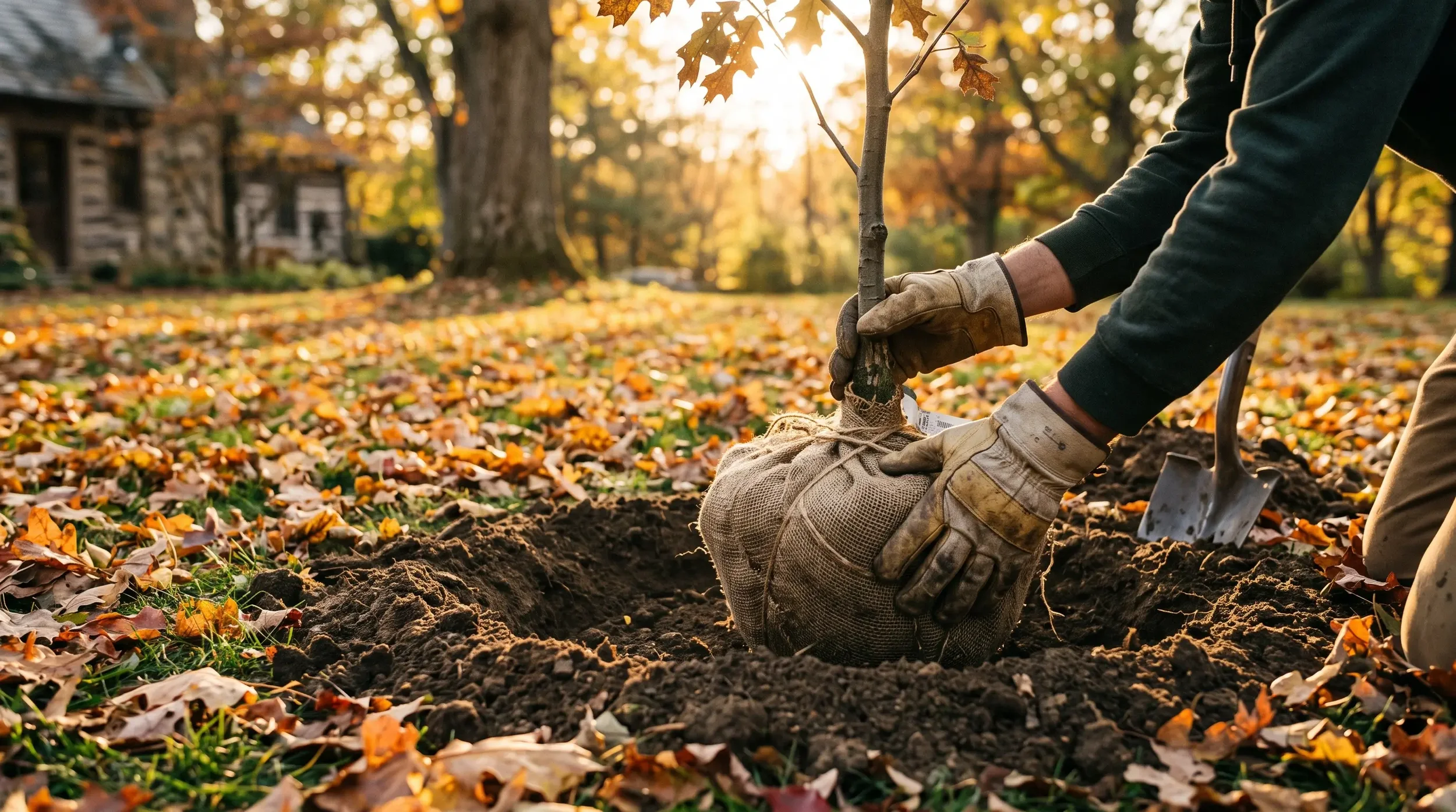
Dig the hole twice as wide as the root ball but only as deep. Planting too deep is the number one reason young trees fail.
Do not amend the backfill with compost or peat. Use the native soil so the roots learn to grow into the ground they will actually live in.
Water deeply once a week until the ground freezes. A slow trickle from a hose for 30 minutes beats a quick sprinkle every day.
Mulch two to three inches deep, kept back from the trunk. Never pile mulch against the bark. Volcano mulching kills more young trees than any pest or disease.
When to Call In Help
Small container trees are easy to plant over a weekend. But on a venue's grounds — larger balled-and-burlapped specimens, or any planting near a building, drive, or utility line — the work is worth handing to a pro.
The same goes for the reverse. If you need to remove an old, damaged, or overgrown tree to make room for a new flowering specimen, do not attempt it yourself. A qualified local tree service team can handle removal, stump grinding, and site prep so your new tree starts life in clean, ready soil.
Frequently Asked Questions
Which flowering trees are best for a wedding venue?
For dramatic early color, eastern redbud and saucer magnolia are hard to beat; dogwood and serviceberry are elegant four-season choices; ornamental cherry and crabapple are crowd-pleasers with reliable disease-resistant varieties. Aim for a mix of bloom times rather than a single showpiece.
When should a venue plant trees for spring weddings?
Plant in fall — roughly six weeks before the ground freezes (late September through early November across most of the northeast and midwest). Fall-planted trees establish their roots over winter and can bloom the very next spring, in time for the season.
How can a venue have blooms all through wedding season?
Stagger your species by bloom time. Star magnolia opens in late winter, cherry and redbud follow in early-to-mid spring, and dogwood carries the later dates — so there's always something in flower across your calendar.
How soon after planting will the trees bloom?
A fall-planted tree with an established root system will often bloom the next spring. Plant in spring instead and many trees take an extra year to put on a full show — a full wedding season lost.
Plant Now, Bloom for Every Spring After
We've spent years working weddings at venues of every size, and the pattern is hard to miss: the grounds that plant with the camera in mind — a redbud framing the arch, a row of cherries down the aisle — give couples photos no amount of rented décor can replicate. If you're building or refreshing a venue, the smartest move we see is to treat your trees as permanent décor and put them where the ceremony and first look actually happen, not just along the driveway.
Pick one or two trees from this list, get them in the ground before the first hard frost, and by April your venue will photograph itself — and keep getting better every season after. Fall is the quiet season. Use it well.
About the Contributor
This piece was contributed by the team at Panorama Tree Care, a certified tree service company in Tampa Bay, Florida. We handle tree inspections, pruning, storm damage cleanup, and safe removal of hazardous trees.